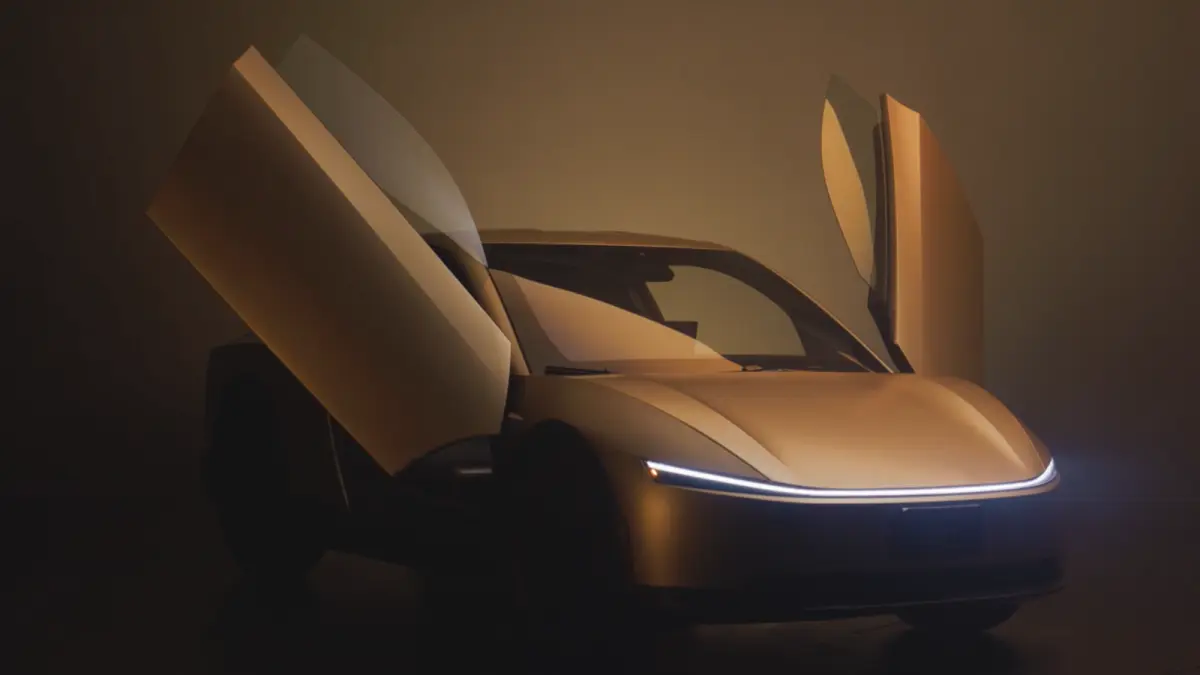
Tesla is taking another step toward its vision of a fully autonomous ride-hailing network with the Cybercab, its two-seat electric vehicle designed without a steering wheel or pedals.
The company is promoting an exclusive Cybercab launch event in Austin, Texas, on September 4, where the public can take rides in the futuristic vehicle.
Tesla has said Cybercab rides are currently available in limited areas of Austin, giving people an opportunity to experience its driverless technology firsthand.
Cybercab Is Available to the Public
Tesla AI chief Ashok Elluswamy said during the event that the service is open to everyone.
The Cybercab is fundamentally different from Tesla's current robotaxi vehicles. Unlike the Model Y vehicles used in Tesla's existing autonomous ride-hailing service, the Cybercab has no steering wheel or pedals, meaning it has no conventional driver-control system inside the vehicle.
For now, Tesla is limiting Cybercab rides to specific parts of Austin as it continues to test and evaluate the service.
The company has not announced a confirmed fare for Cybercab rides. Tesla executives have indicated that the service is expected to use dynamic pricing, meaning fares could increase when demand is higher.
The company has promoted the concept as a premium experience at an affordable price, but it has not yet disclosed the public fare. Tesla is expected to provide more details about pricing as the robotaxi service moves toward wider commercial operation.
Tesla's Bigger Robotaxi Ambition
The Cybercab is central to Elon Musk's long-term plan to turn Tesla into a major player in autonomous transportation.
Tesla ultimately wants the steering-wheel-free vehicle to become the primary model in a much larger robotaxi network. Musk has also suggested that individual Cybercab owners could eventually allow their vehicles to join Tesla's ride-hailing network when they are not using them.
In this model, Tesla would manage a fleet of autonomous vehicles while owners could potentially earn money by making their cars available for passenger trips.
Musk has previously said that Cybercab could eventually become Tesla's highest-volume vehicle.
Tesla's Robotaxi Service Is Still Smaller Than Waymo
Tesla already operates a limited robotaxi service using autonomous Model Y vehicles in several locations. Some of those vehicles have human safety monitors, while the Cybercab is designed to be fully driverless.
According to Texas state records, Tesla had 420 autonomous vehicles registered in the state, including 45 Cybercab vehicles.
By comparison, Waymo, currently a leading US driverless taxi operator, had 988 vehicles registered in Texas. Waymo's autonomous vehicles retain conventional driving controls but operate without a human driver during its driverless service.
Tesla's smaller fleet highlights the scale of the challenge it faces as it attempts to expand autonomous transportation.
Safety Regulators Are Watching
The Cybercab's design also poses a regulatory challenge because US vehicle safety rules generally assume conventional driver controls.
The National Highway Traffic Safety Administration (NHTSA) has indicated that it is evaluating Tesla's activities involving the Cybercab.
The regulatory scrutiny matters because the vehicle is being designed without a steering wheel or pedals.
As the service expands, Tesla will need to show that its autonomous technology and vehicle design meet applicable safety requirements.
Musk's Driverless Vision Faces a Reality Check
Elon Musk has been promising fully autonomous Tesla vehicles for years. Musk formally unveiled the Cybercab at a Tesla event in the Los Angeles area in October 2024, presenting it as a major part of the company's autonomous future.
However, Tesla's robotaxi rollout has progressed more slowly than some of Musk's earlier projections.
The company's robotaxi pilot began in Austin in June 2025 and has since expanded to a limited number of other cities in Texas and Florida. Analysts and investors continue to monitor the pace of expansion closely.
Why Cybercab Matters to Tesla
Autonomous vehicles have become increasingly important to Tesla's future strategy as the company's traditional electric vehicle business faces growing competition, particularly from Chinese EV manufacturers.
Investors see robotaxis as a potentially significant new revenue source for Tesla. The company's market value remains substantially higher than that of traditional automakers, and expectations surrounding autonomous driving are an important part of that valuation.
Tesla says Cybercab production began in April 2026, although Musk has warned that initial production would be very slow.
The Austin public rides therefore represent more than just a product demonstration. They are an early test of whether Tesla can turn its long-promised driverless technology into a commercially viable transportation service.
For now, the Cybercab is available for public rides only in limited areas of Austin, while Tesla works toward expanding the service. The exact passenger fare remains unannounced, with dynamic pricing expected once commercial charging begins.