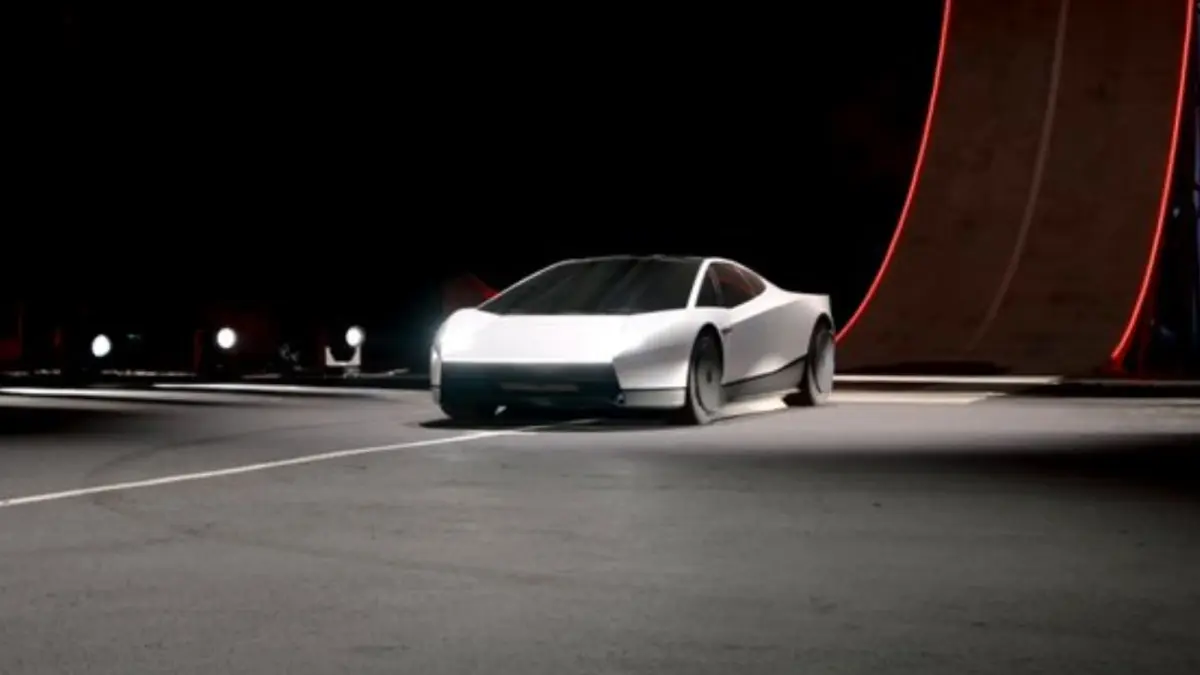
Tesla has finally unveiled its long-awaited next-generation Roadster, nearly a decade after Elon Musk first announced the electric sports car in 2017.
At a demonstration event at SpaceX's rocket development and testing facility in Texas on October 15, 2026, the company showcased an extraordinary feature beyond conventional electric-vehicle technology: the ability to lift the car into the air using compressed-air thrusters.
The unveiling marks a major milestone for a vehicle that has faced years of delays. Initially expected to enter production by 2020, the next-generation Roadster is now scheduled to begin production in 2028.
Tesla Roadster 2 Demonstrates Its Flying Capability
The highlight of the demonstration was a series of aerial manoeuvres that appeared to bring Musk's long-discussed flying-car vision closer to reality.
During the event, the electric sports car drove upside down along a large curved ramp, flipped through the air and remained airborne for several seconds before landing safely.
In another demonstration, the Roadster flipped over Tesla's vehicle lineup, passing above the Cybertruck before returning to the ground.
"Flying cars are real," said Lars Moravy, Tesla's vice president of vehicle engineering, during the event.
Tesla also claimed the Roadster can accelerate from 0 to 60 mph in just one second, an extraordinary figure the company highlighted during its presentation.
How Does the Tesla Roadster Fly?
According to Moravy, the Roadster uses 10 thrusters connected to a system containing 600 litres of compressed air. The system enables the vehicle to lift off the ground and rotate in midair during demonstrations.
The technology represents a departure from conventional electric supercars, which rely on their motors, tyres and aerodynamic systems to deliver performance on the road.
However, Tesla has yet to provide a complete technical breakdown of the thruster system or explain all the conditions under which the vehicle can perform these aerial manoeuvres.
Tesla Roadster 2: Three Variants Planned
Tesla plans to offer the next-generation Roadster in three variants, each targeting a different level of performance and capability.
Performance: Described on Tesla's website as "road ready", this is the entry-level version of the lineup.
Thrust: Positioned as the "race-ready" variant, it is aimed at buyers seeking a more performance-focused experience.
Rocket: The top-tier version is described as "air ready" and will be available by invitation only.
Tesla has also opened reservations for the upcoming electric sports car. Reserving the Performance variant requires a $50,000 payment, while the Thrust version requires a $250,000 reservation.
The Rocket variant cannot be reserved through the standard process and is available only to invited customers.
The company has not yet announced complete specifications, final pricing or detailed delivery timelines for the three versions.
Production Set for 2028 After Years of Delays
The next-generation Roadster was first announced in 2017 as the successor to Tesla's original electric sports car.
The company initially planned to begin deliveries by 2020, but the project faced repeated delays as Tesla shifted focus to other vehicles and development priorities.
Following the latest demonstration, Musk confirmed that production is expected to begin in 2028. This means prospective buyers will have to wait longer for the vehicle to become commercially available.
The Roadster's unveiling introduces an ambitious new chapter for Tesla's electric sports car programme. Its proposed flying capability and extreme acceleration figures set it apart from conventional performance vehicles, although its final production specifications and real-world capabilities remain to be established.