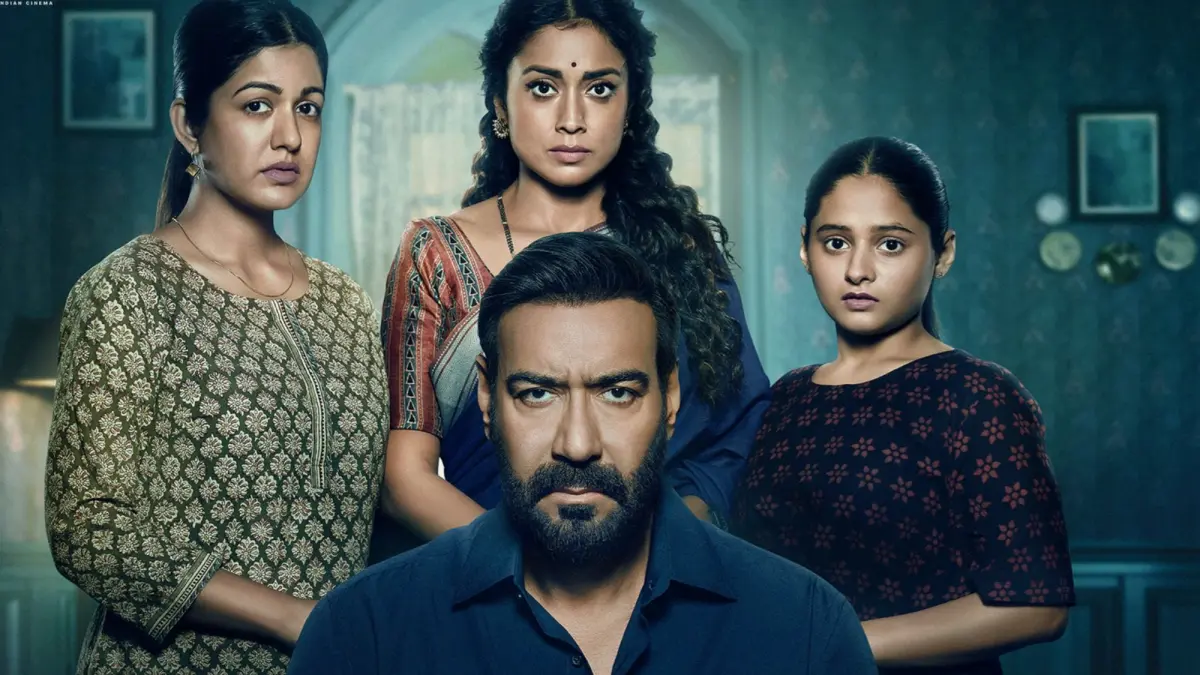
Drishyam: The Conclusion has finally arrived in theatres, bringing Ajay Devgn back as Vijay Salgaonkar for what has been presented as the final chapter of the Hindi Drishyam franchise.
Released on October 2, 2026, the film reunites several familiar faces while taking Vijay's story in a direction separate from the Malayalam Drishyam universe.
The new film had to follow two hugely remembered thrillers without simply repeating their tricks.
Early audience reactions suggest the film's biggest talking points are its suspense, performances, and climax.
However, some viewers and reviews have also raised questions about predictability and the effectiveness of certain story choices.
The Plot
Drishyam: The Conclusion follows Vijay Salgaonkar and his family as the decade-old case of Sameer Deshmukh's disappearance is reopened with crucial new evidence.
Years after Drishyam 2, Vijay now runs a cinema, while his family tries to live peacefully.
As they search for a marriage match for Anju, every proposal mysteriously fails.
Someone is secretly sabotaging the family by accessing Anju's psychiatric records and intimidating potential grooms' families.
A Grieving Mother's Revenge
Mahesh Deshmuk is behind the campaign.
His wife Meera, still devastated by her son's death and Vijay's freedom, wants more than justice; she wants the Salgaonkar family to suffer.
Enter Crime Branch Officer Tomar
The Deshmukhs recruit Crime Branch Superintendent Rajveer Singh Tomar, a ruthless, calculating officer who discovers a historic clue that could finally reopen the cold case.
He confronts Vijay during a tense matchmaking meeting.
The System Strikes Back
The state launches a full-scale assault.
The Deshmukhs hire sharp pubic prosecutor Indrajit Shetty while Tomar and Shetty dig into Vijay's past, using the legal system to pressure and trap the Salgaonkar family.
The Ultimate Battle Of Wits
With his family pushed to the limit, Vijay relies on his belief that "the one who controls the narrative holds all the aces."
He creates an unpredictable web of deception to outsmart the police, protect his family, and finally close the Sameer Deshmukh case.
The Main Cast
The Salgaonkar Family
Ajay Devgn
Shriya Saran
Ishita Dutta
Mrunal Jadhav
The Deshmukh Family
The New Adversaries
Jaideep Ahlawat
Prakash Raj
Supporting Cast
Kamlesh Sawant
Saurabh Shukla
Yogesh Soman
Sharad Bhutadiya
The Creative Team
The creative and technical crew behind Drishyam: The Conclusion is led by director Abhishek Pathak, who also co-wrote the story and screenplay alongside Aamil Keeyan Khan and Parveez Shaikh, with Khan handling the dialogues.
The film's musical canvas features songs composed by Ravi Basrur, Rochak Kohli, and Karma, while Amar Mohile provided the intense cinematic background score.
Cinematographer Sudhir Kumar Chaudhary brings the thriller to life visually, while editor Sandeep Francis keeps the film's pacing sharp.
What Worked
Stepping in as SP Rajveer Singh Tomar, Jaideep Ahlawat is widely considered the film's biggest highlight.
Critics note that his quiet, menacing swagger provides a much better, sharper foil to Vijay Salgaonkar than Akshay Khanna's character did in the second part.
The addition of Prakash Raj as the ruthless public prosecutor adds an incredibly engaging, cynical rhythm to the second-half courtroom sequences, playing beautifully off Ajay Devgn's calculated silence.
What Didn't Work
To ramp up the state vs family conflict, the film heavily scaled down the domestic scenes.
Critics note that by reducing screen time for Shriya Saran and her daughter, the film loses the core "ordinary family in extraordinary distress" vulnerability that made the first two films so universally compelling.
While the movie is highly entertaining, several reviewers feel it plays it too safe by strictly following the predictable Drishyam blueprint rather than delivering a truly good, shocking, or high-stakes finale.
Drishyam: The Conclusion brings Vijay Salgaonkar's story to a tense and dramatic end, taking the franchise's familiar battle of intelligence and deception to its final stage.