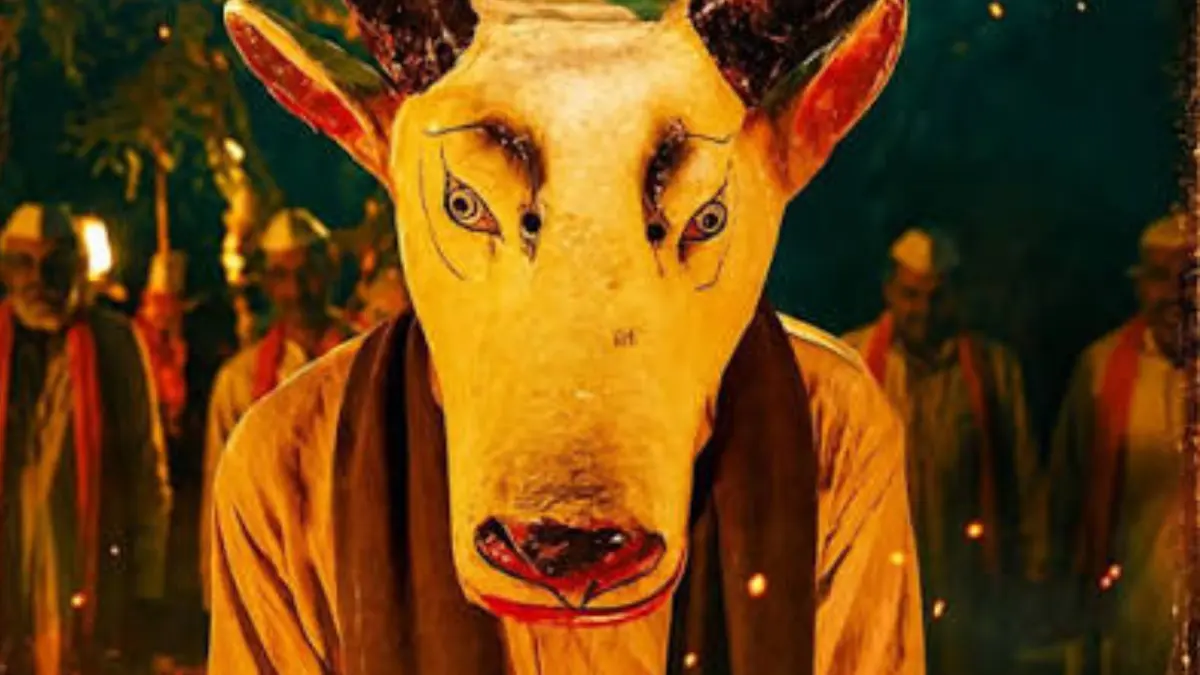
Marathi cinema has a new reason to celebrate on the international stage.
Gondhal has been selected as India's official entry for the 99th Academy Awards, putting the Marathi thriller into the Oscar race and ending weeks of speculation over which Indian film would represent the country.
The Film Federation of India (FFI) announced the decision on September 12, 2026, after a 14-member jury considered 33 films submitted from across the country.
Among the films in contention were major Hindi releases such as Dhurandhar, Dhurandhar: The Revenge, Haq, Border 2, and Main Vaapas Aaunga, along with Telugu, Tamil, Marathi, Gujarati, Malayalam, and films from other Indian language industries.
For Gondhal, the announcement is particularly significant because the film was not simply selected as a popular commercial title.
Its strongest case came from the way it combines distinctly Maharashtrian cultural tradition with a dark human story involving love, marriage, manipulation, faith and murder.
Plot Overview
The story unfolds over a single night in rural Maharashtra. A traditional sacred Gondhal, a ritualistic folk performance honouring the Goddess Bhavani, is being held to celebrate a recent wedding.
Suman, a young bride, finds herself trapped in a deeply oppressive and abusive marriage.
Seeking an escape, Suman takes advantage of the night's chaos. Knowing her partner is obsessed with the sacred ritual, she uses the performance as a distraction to orchestrate a dangerous plan for escape and revenge.
The holy atmosphere of the wedding celebration quickly turns sour, morphing into a tense, high-stakes psychological game of survival.
Core Themes
The film juxtaposes a sacred religious event with a dark, desperate human plot.
It explores how a rigid patriarchal structure uses tradition to bind women, and how those same traditions can be subverted for liberation.
At its core, the movie is about a marginalised woman reclaiming her power.
Suman transitions from a powerless victim to a mastermind controlling her own fate.
The movie deeply weaves Maharashtrian cultural roots into its narrative. It uses the dramatic energy, music and spiritual subtext of the folk performance to mirror the psychological tension of the characters.
Key Reasons For Not Selecting Dhurandhar
Jury member Vivek Vaswani noted that commercial Hindi hits like Dhurandhar and its sequel did not capture or reflect traditional Indian culture in the nuanced manner the committee wanted for an Academy Award contender.
In contrast, Gondhal heavily incorporates regional Maharashtrian folklore, mythology, and sacred ritualistic performance.
Out of the 14-member FFI selection committee, the high-earning Dhurandhar secured only 4 votes, losing significant ground during the evaluation process.
Gondhal emerged from a competitive shortlist of 33 national entries, eventually beating out finalists like Angh and Maine Vaapas Aaunga.
Gondhal carried a strong critical track record coming into the selection, notably winning the Silver Peacock Award for Best Director at the 56th International Film Festival of India (IFFI).
Its unique blend of a tense psychological narrative thriller with traditional art and a score by maestro Ilaiyaraaja gave it a distinct global cinematic profile.
Cast Of Gondhal
Ishita Deshmukh
Yogesh Sohoni
Kishor Kadam
Nishad Bhoir
Anuj Prabhu
Suresh Vishwakarma
Vitthal Kale
Key Crew Members
Santosh Davakhar wrote and directed the film and produced it with Diksha Davakhar under Davakhar Films.
Legendary maestro Ilaiyaraaja served as the music director, composing the traditional, folk-infused score, while Amalendu Chaudhary handled the cinematography.
The comparison between the two films highlights the different ways Indian cinema can approach the international awards circuit.
Dhurandhar comes from a large-scale Hindi commercial filmmaking environment, with a major star cast and the visibility of a high-profile franchise.
Gondhal, meanwhile, is a Marathi thriller rooted in a specific folk tradition, with international recognition through festival screenings and awards.
The jury's explanation suggests that cultural representation, and how it was woven into the story, carried substantial weight.
Vaswani's comments indicate that the panel felt Dhurandhar did not represent Indian culture in the way it was seeking for the official submission.
At the same time, Gondhal was considered more aligned with that objective.
This should not be taken to mean that one film is universally "better" than the other.
They operate in very different cinematic spaces, and the FFI jury ultimately made the Oscar selection.
The 99th Academy Awards are scheduled for March 14, 2027, at the Dolby Theatre in Hollywood, Los Angeles.