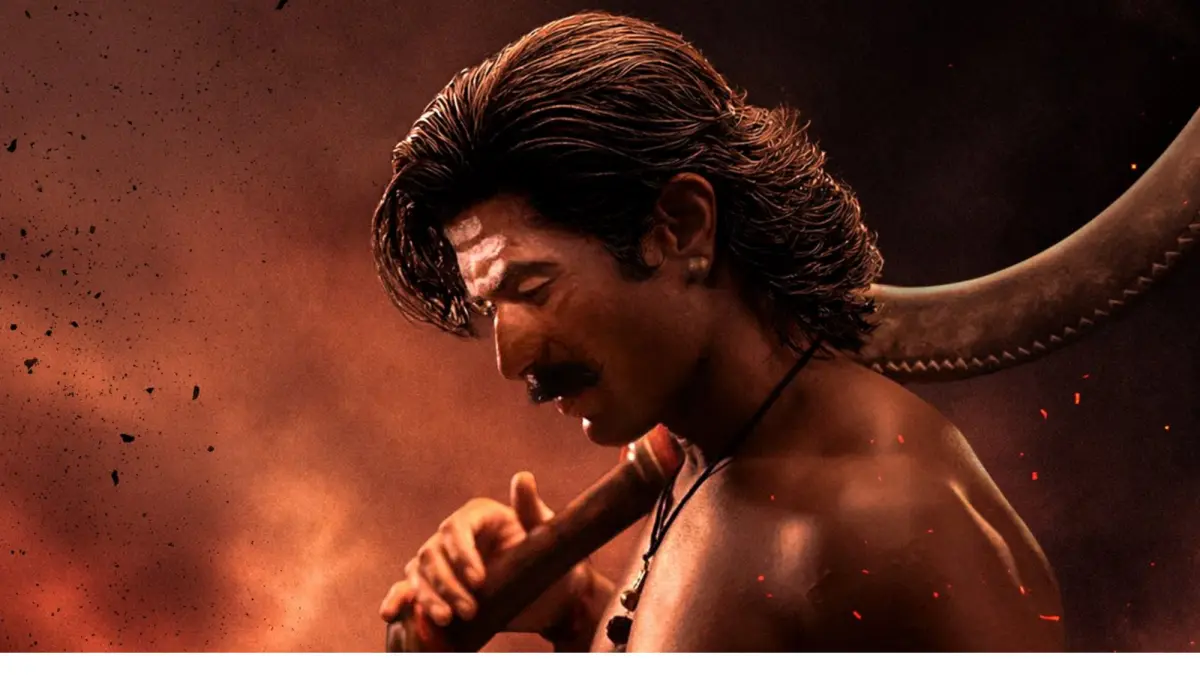
Starring Vijay Deverakonda and Rashmika Mandanna, Ranabaali takes audiences into a lesser-known chapter of India's colonial history, using the Great Madras Famine of 1876-1878 as the backdrop for a story of resistance, sacrifice and supernatural vengeance.
While the film delivers brutal confrontations and a folklore-inspired climax, its background score reportedly struggles to provide the high-energy impact expected from a commercial action epic.
Ranabaali Review: Story and Plot
The story begins in the Rayalaseema region during the 1850s, where a woman named Rajappa gives birth to a stillborn child outside a mysterious cave. Refusing to accept her child's death, she challenges the gods to return him to life.
In a miraculous turn of events, the baby survives, but the local deity Bhadra Mallanna delivers a troubling prophecy: the boy's life will be limited by a predetermined fate.
Named Singanamala Bobbili Ranabaali, the child grows into a fearless horseman known for his stubborn nature and unwavering commitment to protecting his village, Singanamala.
Aware of the prophecy surrounding her son, Rajappa arranges his marriage to Jayamma, hoping that he will have an heir before his time runs out.
The narrative then moves to 1876-1877, when the devastating Great Madras Famine grips southern India. Millions face starvation as food shortages and colonial policies worsen the humanitarian crisis.
Against this backdrop, British commissioner Sir Theodore Hector arrives in the Madras Presidency with a ruthless objective: to seize and export 500,000 tonnes of grain for Queen Victoria. His determination to secure the grain comes at the expense of the starving local population.
While neighbouring regions struggle under British control, Ranabaali refuses to surrender Singanamala's harvest. His decision marks the beginning of an intense confrontation between the village's protector and the colonial forces.
Vijay Deverakonda's Ranabaali: Resistance Against British Rule
The film's central conflict revolves around Ranabaali's determination to protect his people from colonial exploitation. Rather than surrendering to the British administration, he leads his men in a series of daring attacks against the occupying forces.
The middle portions feature ambushes on British troops, raids on colonial railway lines and efforts to recover food supplies for starving villagers. These sequences highlight Ranabaali's transformation from a local protector into a symbol of resistance.
However, the British forces respond with increasingly brutal measures. In one of the story's most disturbing developments, the army executes a pregnant woman in an attempt to break the villagers' resolve.
The violence raises the emotional stakes and demonstrates the lengths to which the colonial administration is willing to go to suppress the rebellion.
Ranabaali eventually appears to be killed, with his body buried away from the village. Believing that the resistance has finally been crushed, Hector celebrates his apparent victory.
But the story takes a supernatural turn when Hector discovers that Ranabaali's body has mysteriously disappeared from its grave.
Ranabaali Climax: Folklore, Divine Intervention and Revenge
The final act shifts the film from a historical resistance drama into a folklore-driven spectacle.
Ranabaali returns not as a conventional ghost but as a terrifying manifestation associated with the spirit of the local deity. Covered in blood and carrying a death hen in his mouth, he performs a ritualistic folk dance before launching a devastating assault on Hector and the remaining British forces.
The sequence combines regional folklore, spiritual imagery and violent action to deliver the film's central moment of vengeance. Ranabaali's transformation gives the climax a distinctly mythological quality, setting it apart from a conventional period action film.
His final confrontation with Hector brings the story's themes of colonial oppression, sacrifice and justice to a dramatic conclusion.
Music and Technical Aspects
Despite its ambitious premise and large-scale confrontations, Ranabaali struggles to maintain the intensity expected of a commercial action drama.
The film's historical setting and folklore elements provide opportunities for a powerful musical backdrop. However, the background score reportedly falls short in some action sequences, failing to deliver the high-energy impact that could have strengthened the film's major confrontations.
The mix of colonial-era conflict and supernatural folklore gives the film a distinctive identity, especially in its final act. The contrast between the historical suffering caused by the famine and the mythological presentation of Ranabaali's revenge forms one of the story's most notable aspects.
Ranabaali Box Office Collection
Ranabaali reportedly collected ₹16.50 crore gross worldwide on its opening day. The initial figure provides an early indication of the film's theatrical performance, although its overall box-office prospects will depend on audience reception and collections over the following days.
Featuring Vijay Deverakonda and Rashmika Mandanna, the film blends historical drama, action, and regional folklore to tell a story of resistance against colonial exploitation.
Its story of a village protector who rises against colonial oppression provides the foundation for an intense cinematic experience, culminating in a dramatic confrontation between resistance and tyranny.