The Tata Group, one of India's oldest and most widely recognised business groups, is facing an unusually public dispute at the very top of its organisation.
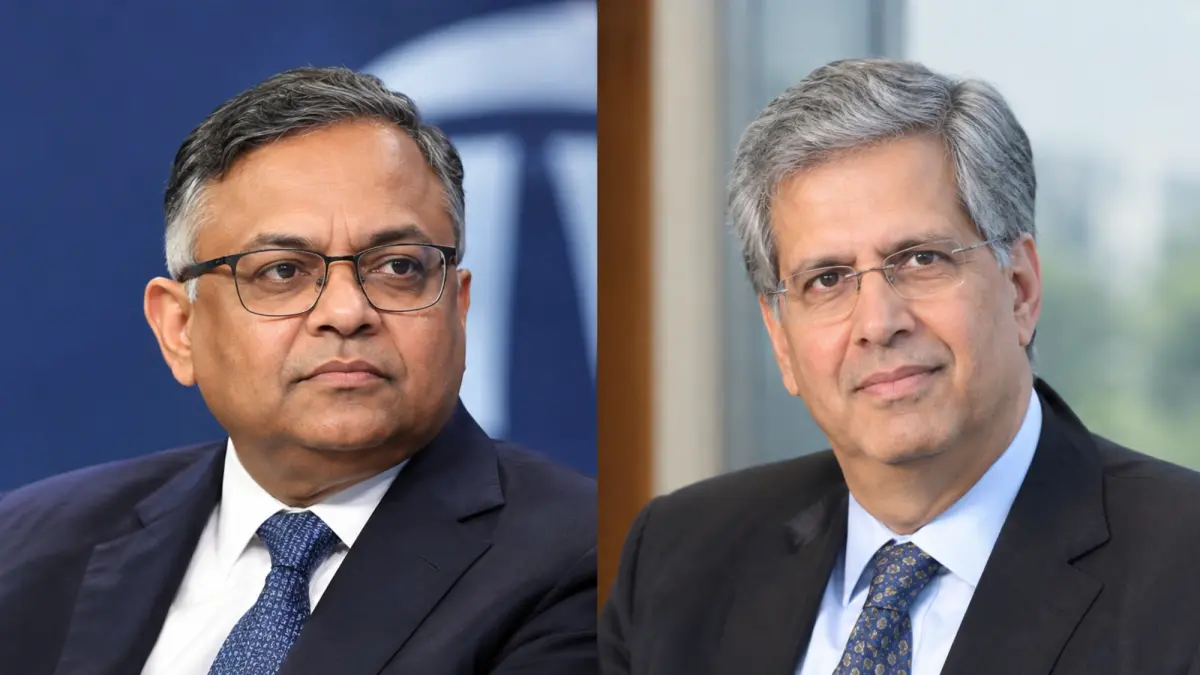
At the centre of the latest developments are Tata Sons, the group's principal holding company, Tata Trusts, which owns roughly 66% of Tata Sons, and a disagreement over Chairman N. Chandrasekaran's future.
What initially appeared to be a settled succession issue has changed dramatically in just a few weeks.
Tata Trust Chairman Noel Tata is challenging the validity of the decision to give Chandrasekaran another five-year term, while Tata Sons has also begun considering a possible public listing.
The Trusts have opposed that route and are looking at alternatives.
The disagreement has moved beyond an internal boardroom discussion into a wider debate over the Tata Group's governance structure.
Core Issues In The Tata Trusts Vs Tata Sons Dispute
During the Tata Sons board meeting on September 17, 2026, four directors voted in favour of Chandrasekaran's reappointment, while Tata Trust Chairman Noel Tata voted against.
With the two trust-nominated directors splitting their vote, an independent director cast the deciding vote to pass the resolution.
Tata Trust declared the reappointment illegal and 'void ab initio', arguing that Article 121 of Tata Sons' Articles of Association requires affirmative support from a majority of trust-nominated directors, meaning both nominees, given that there are only two.
They assert a chairman's casting vote cannot override this precondition.
The Reserve Bank of India (RBI) rejected Tata Sons' request to surrender its registration as a core investment company, forcing the firm toward regulatory compliance and a potential public listing (IPO).
While Chandrasekaran's camp favours moving toward public markets for transparency, Noel Tata and the Trusts have opposed listing, citing a continuation of the late Ratan Tata's unlisted model or proposing an alternative holding-company restructuring.
Legal teams are assembling for a potential courtroom showdown. Tata Trust has retained senior advocate Abhishek Manu Singhvi.
At the same time, Chandrasekaran is advised by senior advocate Harish Salve, with prominent external backing including NCP leader Sharad Pawar, who has voiced support for the Trust's philanthropic governance model.
The immediate focus will be on the validity of Chandrasekaran's reappointment and how Tata Sons' Articles should be interpreted.
At the same time, discussions over Tata Sons' future structure are expected to continue.
The potential listing has not simply disappeared, nor has the Trusts' opposition to that route.
The alternative restructuring proposal also remains at the discussion stage and would face considerable regulatory and commercial hurdles if pursued.