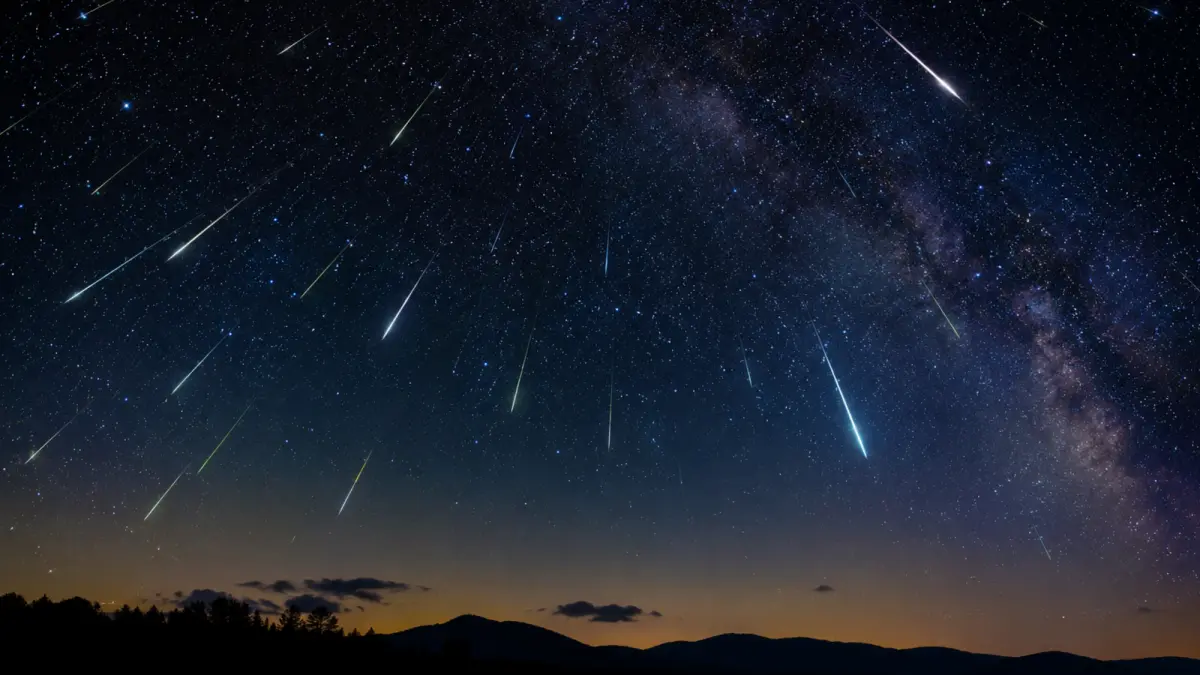
Skywatchers worldwide, including in India and Tamil Nadu, can watch the Orionids meteor shower as it peaks overnight from October 21 to 22, 2026.
Known for its fast-moving meteors and occasional bright fireballs, the annual celestial event occurs as Earth passes through debris left behind by Halley's Comet.
The Orionids meteor shower remains active from October 2 to November 7. Under ideal viewing conditions, observers can expect around 10 to 20 meteors per hour, although the actual number visible will depend on local weather, sky conditions and light pollution.
What Makes the Orionids Meteor Shower Special?
The Orionids are considered one of the fastest meteor showers of the year. The meteors enter Earth's atmosphere at about 66 kilometres per second, producing bright streaks of light across the night sky.
Some may leave glowing trails that remain visible for several seconds, while occasional fireballs can make the spectacle even more impressive.
The shower gets its name from the constellation Orion, as the meteors appear to originate from a point near the constellation, northeast of the bright star Betelgeuse.
However, astronomers recommend looking across the wider sky, about 45 to 90 degrees from the radiant, to spot longer, more prominent meteor trails.
The Orionids can be observed from both the Northern and Southern Hemispheres after midnight. Although the meteors appear to emerge from Orion, they can streak across different parts of the sky.
Best Time to Watch the Orionids in India and Tamil Nadu
People in India, including Tamil Nadu, can watch the Orionids meteor shower during the early hours of October 22. The best viewing window is expected to be between 2 am and 5 am IST, with conditions potentially improving after the Moon sets.
A bright waxing gibbous Moon may make it difficult to spot fainter meteors during the earlier part of the night. The Moon is expected to set at approximately 3:17 am IST, making the period after moonset and before dawn particularly favourable, provided the sky remains clear.
For the best experience, observers should choose a location away from streetlights, buildings and other sources of artificial illumination. A clear, dark sky improves your chances of spotting the meteors.
How to Watch the Meteor Shower
Unlike some astronomical events, the Orionids do not require a telescope or binoculars. The meteors are best viewed with the naked eye because they can appear across a wide area of the sky.
Here are a few tips for watching the shower:
Choose a dark location: Get away from city lights and heavily illuminated areas.
Watch after midnight: The hours before dawn generally offer better viewing opportunities.
Let your eyes adjust: Spend about 20 to 30 minutes in the dark to improve your night vision.
Look across the sky: Avoid focusing only on Orion; meteors may appear in other directions.
Check the weather: Cloud cover can significantly reduce visibility.
Patience is important, as meteors may appear at irregular intervals rather than in a continuous stream.
Halley's Comet: The Source of the Orionids
The Orionids originate from debris shed by Halley's Comet as it travels around the Sun. When Earth crosses this stream of dust and rocky particles, the debris enters the atmosphere and burns up, creating the bright streaks commonly known as shooting stars.
Halley's Comet is also responsible for the Eta Aquariids meteor shower, which occurs annually in May.
Scientists are also exploring sending a spacecraft to study Halley's Comet more closely. A proposed mission concept involves a trajectory that could allow a spacecraft to launch in the 2030s and rendezvous with the Comet around 2060, ahead of its next expected return to the inner Solar System in 2061.
A Celestial Show Worth Watching
The Orionids meteor shower offers an accessible opportunity to observe a natural astronomical event without specialised equipment.
Although moonlight may reduce visibility during the first part of the night, the hours following moonset could provide better conditions for skywatchers in Tamil Nadu and elsewhere in India.
Those hoping to catch the shower should head to a dark location, look up after midnight and remain patient. With clear skies and limited light pollution, the Orionids may deliver a memorable display before dawn on October 22.