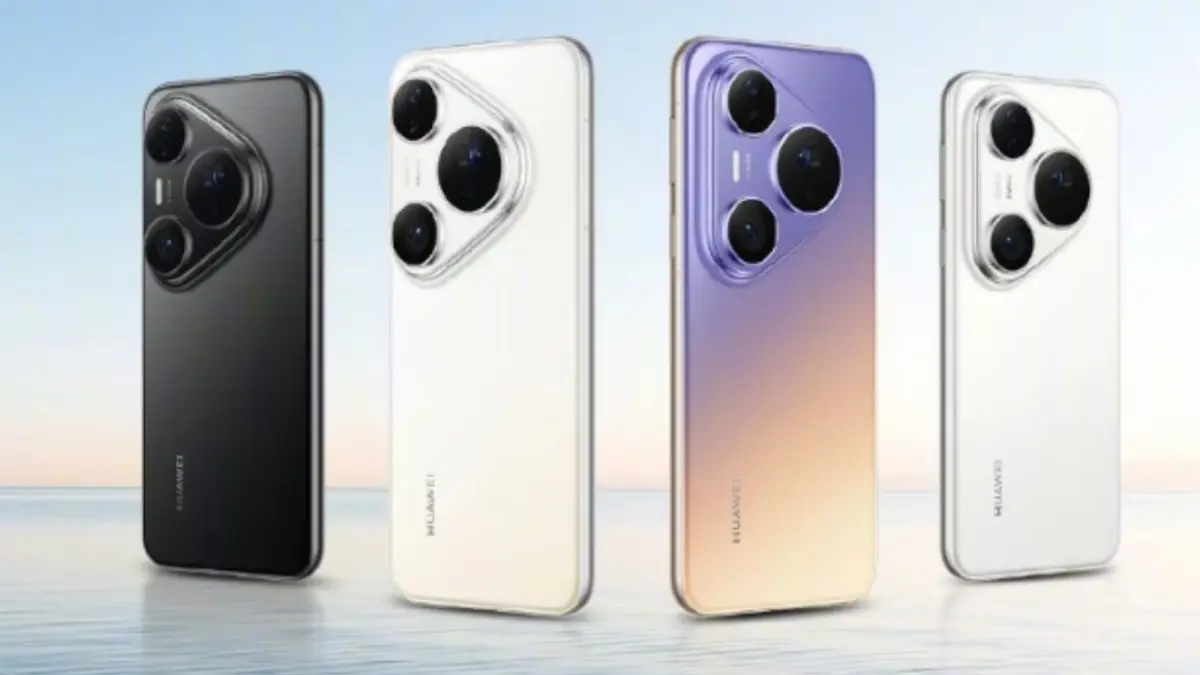
Huawei has added a new member to its Pura 90 smartphone family with the launch of the Huawei Pura 90 Plus in China on October 28, 2026.
The new smartphone combines a camera-focused design with upgraded hardware, a large battery, and Huawei's latest HarmonyOS software.
Its most interesting feature is the 50-megapixel main camera with a large 1-inch sensor and a variable aperture, which could make it an attractive option for mobile photography enthusiasts.
The handset was unveiled during Huawei's Double 11 shopping season product event.
The Pura 90 Plus is positioned in the premium smartphone segment, offering a mix of camera hardware, distinctive styling, and everyday features.
The company is also bringing back the Plus name in its flagship phone lineup after a long gap, making this launch an interesting development for Huawei fans.
Launch Prices By Configuration
Launch prices start at CNY 5,499 (approximately ₹73,500 or $825) for the model with 12GB of RAM and 256GB of storage.
The mid-tier variant, with 12GB of RAM and 512GB of storage, is priced at CNY 5,599 (approximately ₹80,500).
The top-tier option comes with 16GB of RAM and 1TB of storage, priced at CNY 6,999 (approximately ₹94,000, or $1,050).
Available Colours
The device is offered in four premium colour finishes: Dawn Gold, Obsidian Black, Snow White, and Sunset Purple.
International Availability
At launch, market availability remains completely exclusive to mainland China, with no sales occurring outside this region.
Furthermore, Huawei has not yet confirmed an official timeline or pricing structure for a broader global release.
Huawei Pura 90 Plus vs Huawei Pura 90 Pro Max
The Pura 90 Pro Max is an especially useful comparison because it belongs to the same smartphone family.
The Pro Max has a larger 6.9-inch LTPO OLED display and uses Huawei's Kirin 9030S processor.
Its rear camera system includes a 50-megapixel main camera, a 40-megapixel ultra-wide camera, and a 200-megapixel telephoto camera.
The Pura 90 Plus, meanwhile, offers a 6.8-inch quad-curved display, the Kirin 9025 processor, and a 48-megapixel telephoto camera.
Its curved frame also gives it a different physical design from the flatter-edged model in the Pura 90 family.
The Plus model may appeal to buyers who want a premium Huawei phone with a large main camera sensor without moving to the more camera-focused Pro Max configuration.
Those who prioritise high-resolution telephoto photography may find the Pro Max more appealing.
The best choice will depend on the final price, regional availability, and how much a buyer values the main camera, zoom performance, and design.
If Huawei can deliver the camera quality and performance promised by its specifications, the phone could become an interesting choice for photography enthusiasts.