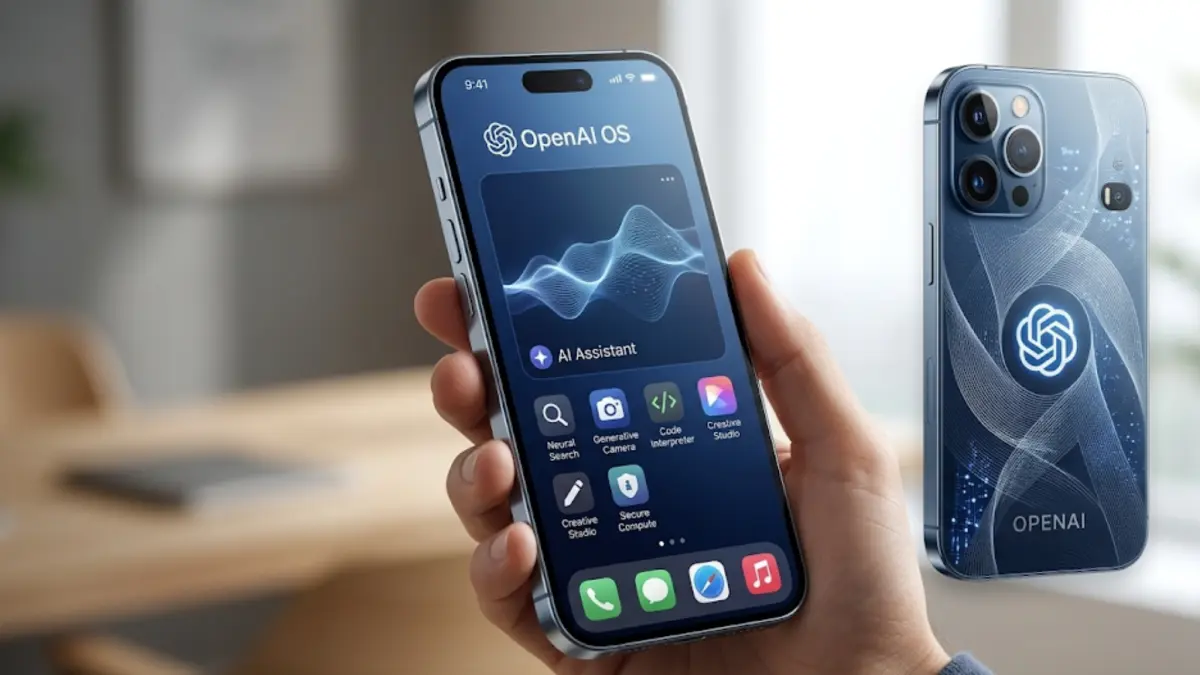
In a bold move that could change how the world uses technology, OpenAI has officially announced its plan to build a new kind of smartphone.
This device is not just a normal phone with a better camera; it is a machine built entirely around AI agents.
The Big Announcement
Sam Altman, the leader of OpenAI, announced during a special tech event. He was joined by Jony Ive, the famous designer who once helped create the iPhone. Together, they explained that the goal is to make a device that feels more natural and less distracting.
Instead of a screen filled with many apps, this phone uses a single powerful AI agent. This agent can book flights, order food, and manage emails without the user ever having to open a single app.
Will this device still have a screen? While details are slim, the team suggests that while a screen exists, it will not be the main way people use the device. The focus is on voice and gesture control.
While OpenAI provides the "brain," the company is not building the hardware alone. Reports show they have partnered with Luxshare, a major company that already helps build iPhones.
For internal power, they are working with Qualcomm and MediaTek to develop a custom AI System-on-Chip. This chip is designed specifically to handle AI agents without draining the battery like a normal phone would.
A New Operating System
Sam Altman recently hinted on social media that the world needs to rethink how operating systems are designed. This phone will likely not run on Android or iOS. Instead, it will use a new agent-first system.
Instead of rows of icons, the interface may focus on a single conversation or a timeline of tasks the AI is doing for the user.
This doesn't mean that the old apps will stop working. The AI agent will likely act as a bridge, logging in to your existing services so the user does not need to touch the apps or the screen.
Why is this step being taken?
The company believes that current smartphones are too messy. Users spend too much time clicking through menus. OpenAI wants to fix this by creating a phone that understands what a person needs before they even ask.
Key reasons for this project:
Simple Living: Removing the need to manage dozens of accounts and apps.
Real-time Help: The AI agent uses sensors to determine where a person is and what they are doing, providing better help.
New Design: With Jony Ive's help, the hardware will look and feel different from anything seen before.
The team is currently working with partners to finalise the design. While the public will likely see the first look at the software by the End of 2026 or the start of 2027, mass production of the phone is expected to begin in 2028.
This shift marks the beginning of a new era where the phone acts more like a personal assistant and less like a digital box.