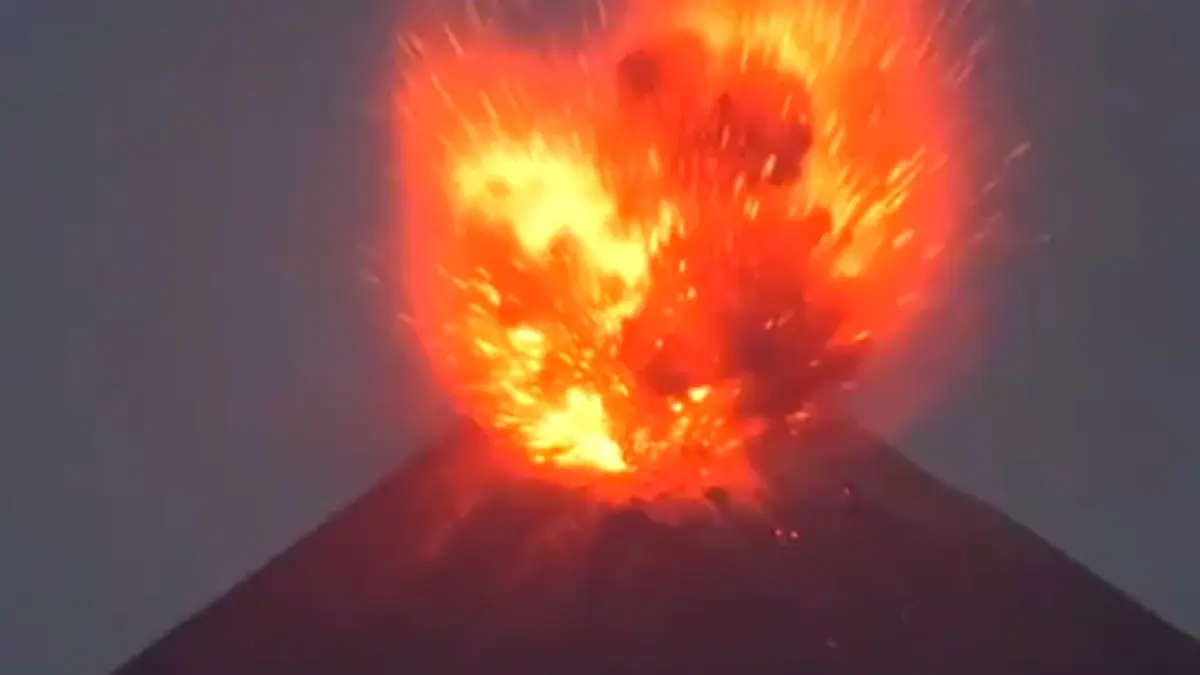
Indonesia is beginning to restore normal life after a powerful eruption of Mount Anak Krakatau, but volcanic ash is still affecting parts of the country.
The eruption disrupted airports, cancelled and delayed thousands of flights, stranded hundreds of thousands of travellers, and forced schools in some affected areas to move temporarily to online learning.
Several airports, including Jakarta's major Soekarno-Hatta International Airport, have reopened after authorities determined conditions were safe enough to resume aviation.
However, Anak Krakatau remains active, and officials continue to closely monitor the volcano, ash levels, and wind direction.
Eruption Details and Locations
Mount Anak Krakatau
Located in the Sunda Strait between Java and Sumatra, the highly active volcano began a rare, continuous 25-hour eruptive sequence.
It produced massive lava fountains, volcanic lightning, and an ash cloud that shot up to 15 kilometres (50,000 feet) into the sky.
Mount Semeru
Located over 800 kilometres away in East Java, Semeru simultaneously erupted, sending an ash column 1 kilometre above its summit.
Current Status
Both volcanoes remain under high alert: level III for Anak Krakatau, and a 3-kilometre exclusion zone is strictly enforced around the mountain.
Fortunately, Indonesia's volcanology agency confirmed there is no immediate tsunami threat from these current eruptions.
Why Did The Volcano Erupt?
Indonesia is one of the world's most volcanically active countries because it lies along the Pacific Ring of Fire, an area where several tectonic plates meet and interact.
Plate movement creates conditions that allow magma to rise toward the Earth's surface.
When pressure from magma and volcanic gases becomes strong enough, the material can escape through weaknesses in the Earth's crust, producing an eruption.
In Anak Krakatau's case, Indonesian geological officials have linked the recent activity to the continued movement of magma and volcanic gases beneath the volcano.
Activity had already intensified since July, making the September eruption part of a longer period of volcanic unrest rather than something that happened without warning.
Travel And Flight Disruption
During the peak of the eruption, eight airports suspended operations, leaving about 341,000 passengers stranded and affecting 2,961 flights through delays or cancellations.
Currently, five airports have reopened while three remain closed, and operations are slowly resuming as 178 aircraft undergo airworthiness inspections for air damage.
The airports that were affected by the volcanic ash and related airspace restrictions are:
Soekarno-Hatta International Airport in Banten
Halim Perdanakusuma Airport in Jakarta
Radin Inten II Airport in Lampung
Husein Sastranegara Airport in Bandung
Budiarto Airport in Curug, Banten
Pondok Cabe Airport in Banten
Muhammad Taufiq Kiemas Airport in Lampung
Atung Bungsu Airport in Pagar Alam, South Sumatra
Exclusion Zones And General Movement
A 3-kilometre exclusion zone around the active crater of Mount Anak Krakatau remains heavily enforced.
All fishing, marine traffic and tourism activities near Sebesi Island and the Sunda Strait have been temporarily suspended.
Schools across several affected provinces, including parts of Jakarta, have transitioned to online learning to prevent children from travelling through the heavy ashfall.
Joint rescue forces, including the Indonesian Military (TNI), National Police (Polri), and the local Disaster Mitigation Agency (BPBD), have set up coordinated emergency shelters and mobilised rescue personnel to assist people living near the active danger zones.
Respiratory And Physical Protection
The Ministry of Health issued an urgent notice identifying approximately 3.3 million elderly citizens in the ash-hit regions who are at elevated risk of severe respiratory complications, acute respiratory infections, and cardiovascular distress due to the ash's high silica content.
The Indonesian Red Cross (PMI) has begun distributing specialised support packages containing 100,000 protective masks, goggles, and oxygen concentrators to the highest-risk communities.
Official Safety Advisories
Citizens are ordered to wear N95 or KN95 respirators and tightly fitting protective eyewear rather than contact lenses when outdoors.
Homes should remain completely sealed, with windows and doors shut, and HVAC systems set strictly to recirculate mode.
Cover open water storage sources immediately to prevent contamination.
When cleaning property, residents are warned to wet the ash and avoid dry sweeping.
Dry silica dust acts like microscopic glass fragments that can lacerate the lungs, eyes, and skin if stirred up, and can solidify like cement if improperly cleared.
Infrastructure And Environmental Intervention
The National Disaster Mitigation Agency has begun planning weather modification through cloud seeding.
This aims to force rainfall across heavily blanketed sectors to wash the dangerous floating ash plumes out of the atmosphere naturally.
Indonesia is returning to a more normal routine, but the country remains on alert.
The eruption has highlighted the challenges Indonesia faces as a nation with more than 100 active volcanoes.
Airports may continue returning to normal, but airlines will need time to clear the passenger backlog and reposition aircraft.
At the same time, Indonesian authorities will continue watching Anak Krakatau for changes in eruption strength, ash production and wind direction.