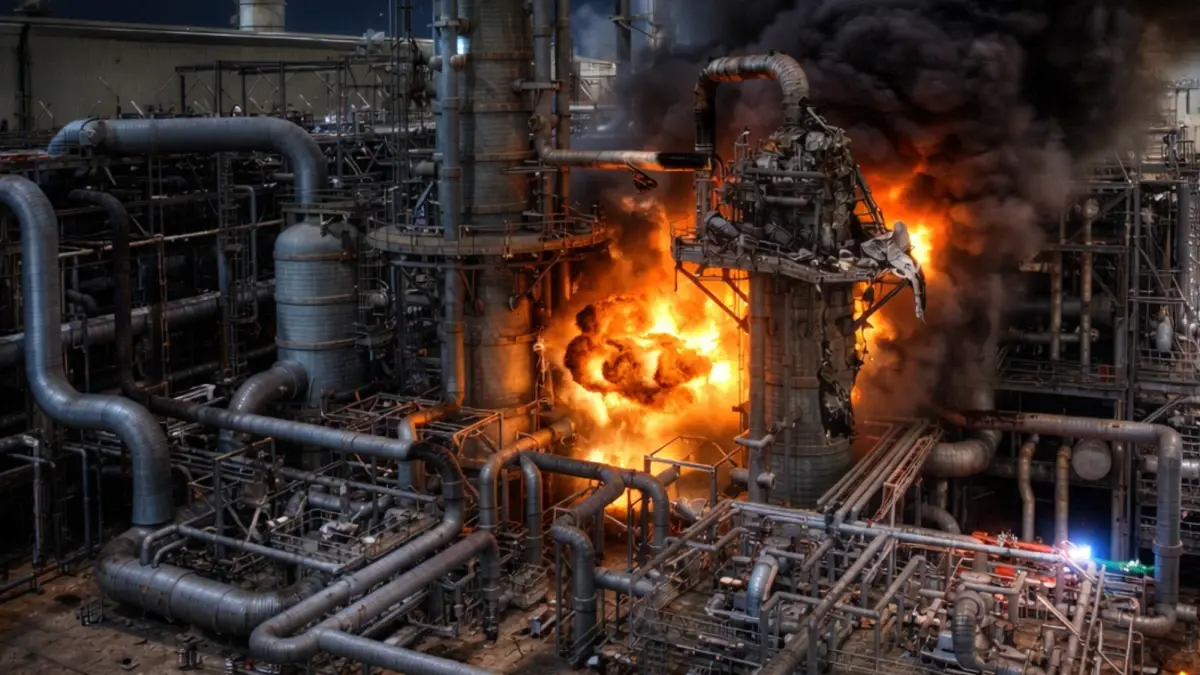
The conflict in West Asia took a serious turn on March 19, 2026, as Iran launched coordinated attacks on energy infrastructure in Gulf countries, including Qatar's key liquefied natural gas (LNG) facilities. The strikes were carried out in response to an earlier attack on Iran's South Pars gas field, which Tehran has blamed on Israel.
Qatar's Ras Laffan Facility Targeted
Iran fired ballistic missiles at Ras Laffan Industrial City, Qatar's main gas hub located on its northern coast. The Qatari Defence Ministry confirmed the attack, stating that the strikes caused damage and posed a direct threat to national security.
Ras Laffan is one of the world's most important LNG export terminals, and any disruption there raises concerns about global energy supply.
Maritime Incidents raise alarm
The escalation has also affected maritime activity in the region.
These incidents highlight the growing danger in the Strait of Hormuz, a crucial route for global oil and gas shipments, where tensions have significantly increased.
Casualties reported amid Ongoing Strikes
The attacks have led to civilian casualties. According to medical sources, Three Palestinian women were killed in the West Bank after shrapnel hit a building in Beit Awa near Hebron. A foreign worker was killed in central Israel. These deaths mark a tragic expansion of the conflict's impact on civilians.
Oil Prices react to Escalation
Global markets responded quickly, with oil prices rising by around 3% on March 19. The increase reflects concerns about possible disruptions to supply, especially as key energy facilities and shipping routes are under threat.
US and Regional reactions
US President Donald Trump warned Iran against further escalation, stating that the US could target Iran's South Pars gas field if attacks on Gulf infrastructure continue. He also confirmed that while Israel carried out the initial strike on South Pars, the US had no prior involvement.
Meanwhile, several Arab and Islamic nations, including Qatar, Saudi Arabia, the UAE, Egypt, Pakistan, and Türkiye, strongly condemned Iran's actions.
In a joint statement following a ministerial meeting on March 18, these countries said the attacks "cannot be justified under any pretext". They reaffirmed the right of nations to defend themselves under Article 51 of the UN Charter.
Rising uncertainty in the region
With Iran expanding its response beyond Israel to include Gulf nations, the conflict is entering a more dangerous phase. The targeting of energy infrastructure and increased risks in vital shipping routes signal a broader impact on both regional stability and global markets.
As tensions continue to rise, the situation remains highly volatile, with the potential for further escalation in the coming days.