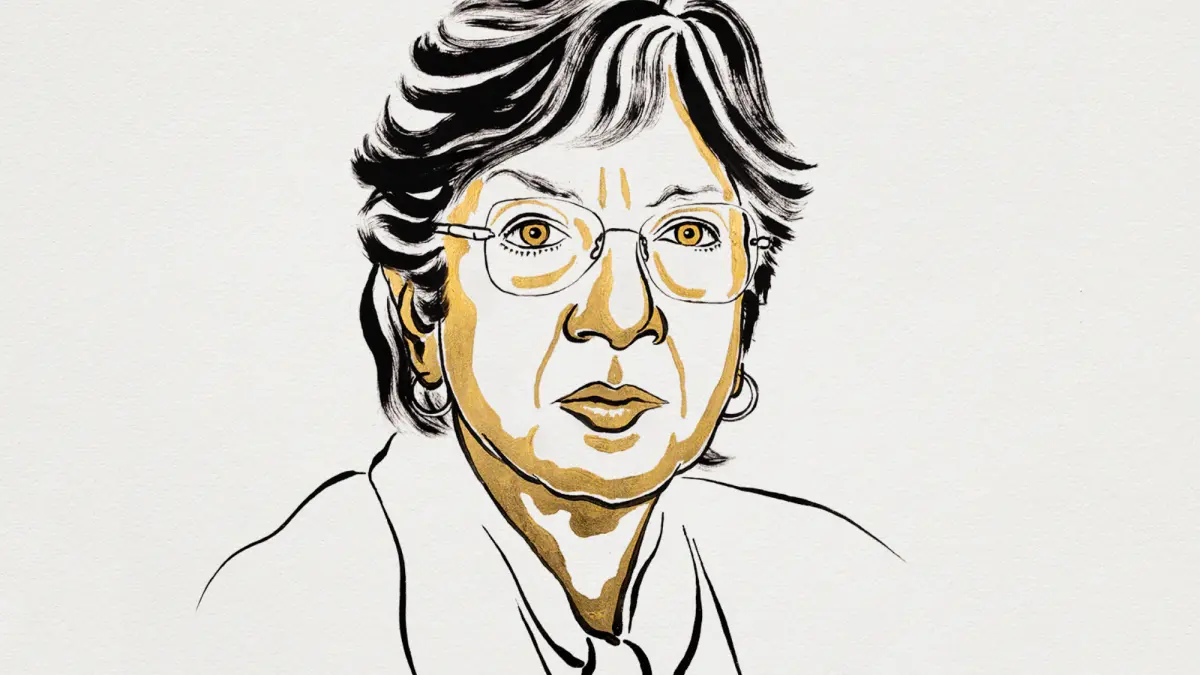
Navanetham'Navi' Pillay, a South African jurist of Indian Tamil origin, won the 2026 Nobel Peace Prize. It was awarded for her efforts to "Promote Peace and International Law".
Nobel Peace Prize of 2026
The 2026 Nobel Prizes are announced between October 5 and October 12, 2026. The official presentation ceremonies will take place on December 10, 2026 (the anniversary of Alfred Nobel's death) in Stockholm and Oslo.
The Nobel Prize is awarded in six categories: Physics, Chemistry, Literature, Peace, Physiology or Medicine, and Economic Sciences. A South African jurist of Tamil origin is among the awardees.
Navanetham "Navi" Pillay, a prominent South African jurist of Indian Tamil origin and former United Nations High Commissioner for Human Rights, received the 2026 Nobel Peace Prize for her contributions to international justice, human rights, and promoting peace through the rule of law.
Who is Navanetham Navi Pillay?
Navanetham Navi Pillay is the daughter of a Durban bus driver. Born to parents of Indian descent, Pillay rose from a community that faced racial and economic barriers to become a leading figure in International Law.
Growing up during the apartheid era, she witnessed racial discrimination and inequality, experiences that helped shape her commitment to justice and equal rights.
Pillay pursued a career in law when South Africa's legal and political systems were deeply divided along racial lines. Despite the barriers women and people of colour faced, she became a respected lawyer and later one of the country's most influential legal figures.
In 1967, she became the first woman to establish a law practice in Natal and the first non-white woman to serve as a judge on South Africa's High Court. Her achievements marked important milestones in a legal system that had long excluded many people because of their race and gender.
Contribution to International Justice
Pillay's career extended beyond South Africa as she took on significant roles in international judicial institutions. She served as a judge at the International Criminal Tribunal for Rwanda, which was established to prosecute those responsible for serious crimes committed during the 1994 Rwandan genocide.
Her work at the tribunal helped develop international criminal law and efforts to hold individuals accountable for atrocities.
The tribunal also played an important role in advancing the recognition of sexual violence as a serious international crime.
Pillay later served as a judge at the International Criminal Court (ICC). This institution prosecutes individuals accused of genocide, crimes against humanity, war crimes and the crime of aggression under its jurisdiction.
The Norwegian Nobel Committee's decision recognises Pillay's efforts to promote peace through international law and justice. The committee has stressed that effective legal institutions are essential to resolving disputes peacefully and ensuring that serious crimes do not go unpunished.
Pillay's selection places international justice and the protection of human rights at the centre of this year's Peace Prize. Her career underscores the importance of upholding the rule of law, protecting vulnerable communities and ensuring that those responsible for serious abuses can be held accountable.
Her Nobel recognition marks a significant moment in a career spanning national judicial service, international criminal tribunals and the United Nations, reinforcing the continuing role of law and justice in the pursuit of a more peaceful world.