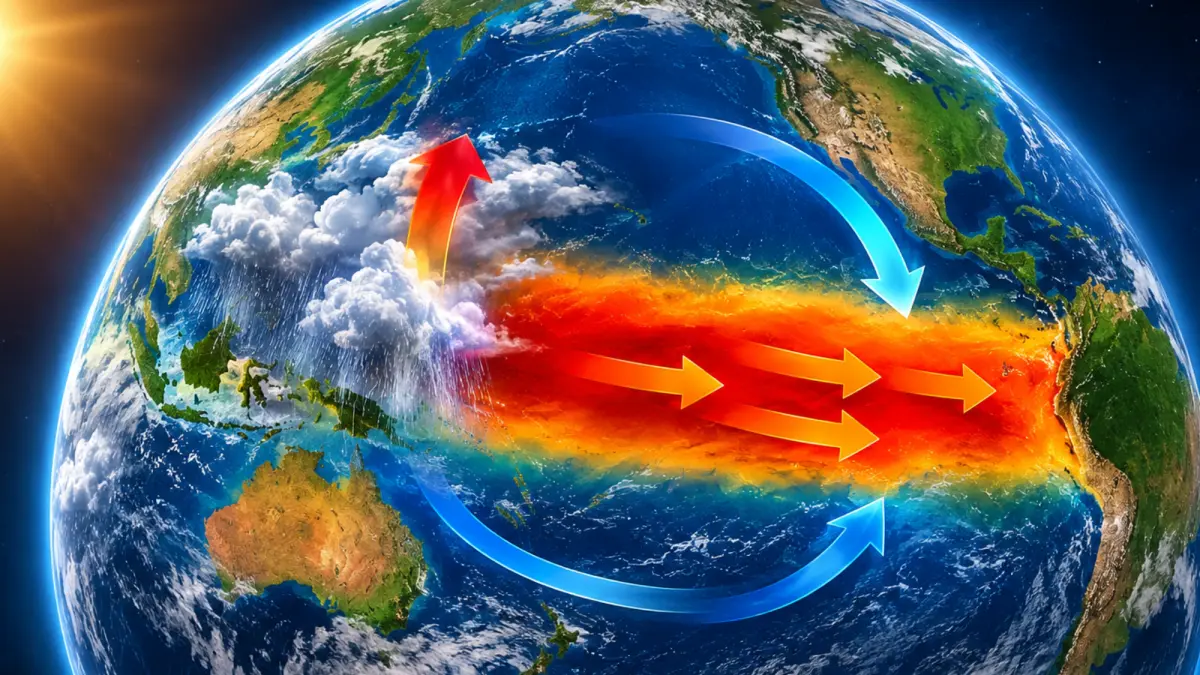
Weather experts are warning that a potentially powerful El Niño could intensify global temperatures, disrupt rainfall patterns and worsen food insecurity in several parts of the world during the final months of 2026.
The developing climate phenomenon could compound the effects of human-induced global warming, raising concerns about extreme heat, droughts, flooding and rising food prices.
The World Meteorological Organization (WMO) has warned that this year's El Niño could rank among the strongest recorded since at least 1950.
Forecasts point to unusually warm sea surface temperatures across large parts of the world, with significant consequences for weather conditions and vulnerable communities.
El Niño Could Intensify Global Temperatures
El Niño is the warm phase of the naturally occurring El Niño-Southern Oscillation (ENSO), a climate pattern that influences weather across the globe. It typically occurs every two to seven years and can raise global temperatures while disrupting established rainfall patterns.
During an El Niño event, changes in ocean temperatures and atmospheric circulation can bring drought to some regions and unusually heavy rainfall to others.
WMO has warned that the phenomenon could intensify the effects of climate change, increasing the likelihood of unusual weather conditions during October, November and December 2026.
Forecasts cited in the warning suggest that sea surface temperatures in the central and eastern tropical Pacific could rise substantially above normal levels.
However, the reported projection of 3.7 degrees Celsius above normal requires verification against the latest official forecast, as it would represent an exceptionally large anomaly.
Heatwaves and Food Insecurity Raise Concerns
The combination of global warming and a strong El Niño could increase the risk of record-breaking temperatures and place additional pressure on public health systems.
Vulnerable populations, particularly in countries with limited access to healthcare, reliable water supplies and adequate food, could face the greatest risks.
Changes in rainfall and temperature could also affect agricultural production worldwide. Droughts may reduce crop yields, while intense rainfall and flooding could damage farmland, infrastructure and food distribution networks.
The World Food Programme has warned that severe droughts and flooding associated with El Niño can worsen hunger in vulnerable regions.
Any significant disruption to food production could also put upward pressure on the prices of essential commodities, including rice, coffee and cocoa.
India Faces Agricultural and Economic Risks
India could face considerable challenges if El Niño weakens rainfall during critical agricultural periods. The country's economy depends heavily on agriculture, while millions of rural households rely on farming and related activities for their livelihoods.
Below-normal rainfall can reduce crop production, lower rural incomes, and weaken consumer spending. Sugarcane and grain cultivation are particularly sensitive to water availability, making prolonged dry conditions a concern for farmers and the wider food supply chain.
Lower agricultural output could also contribute to higher food prices, particularly if domestic supply shortages coincide with rising global input costs.
Fertiliser availability and prices may add further pressure on farmers, although the scale of these risks will depend on actual weather conditions, crop yields and government measures.
The claim that India's sugar production forecast has been reduced to 29.5 million metric tonnes should be checked against the latest official estimates before publication.
Tamil Nadu Could Face a Different Weather Threat
While drought is a concern in parts of India during strong El Niño conditions, Tamil Nadu's coastal districts may face a different set of risks during the northeast monsoon season.
The state's rainfall patterns are influenced by weather systems over the Bay of Bengal, atmospheric circulation and the development of low-pressure areas.
These systems can bring intense rainfall over short periods, increasing the risk of urban flooding, waterlogging, and transport disruption.
A strong El Niño does not automatically mean that Tamil Nadu will experience extreme rainfall. Local forecasts and the development of individual weather systems will determine the actual risk.
Residents should follow updates from the India Meteorological Department (IMD), particularly during periods of heavy rain.
Global Impact Could Extend Into 2027
The potential effects of a strong El Niño extend beyond temperature records. Disrupted harvests, water shortages, flooding and rising food prices could place additional pressure on households and national economies in the months ahead.
Although the severity of the developing event depends on evolving ocean and atmospheric conditions, experts stress that the combination of natural climate variability and human-driven global warming can increase the risks of extreme weather.
The coming months will be critical for monitoring the strength of El Niño, its influence on regional rainfall and its potential impact on agriculture, public health and food security.