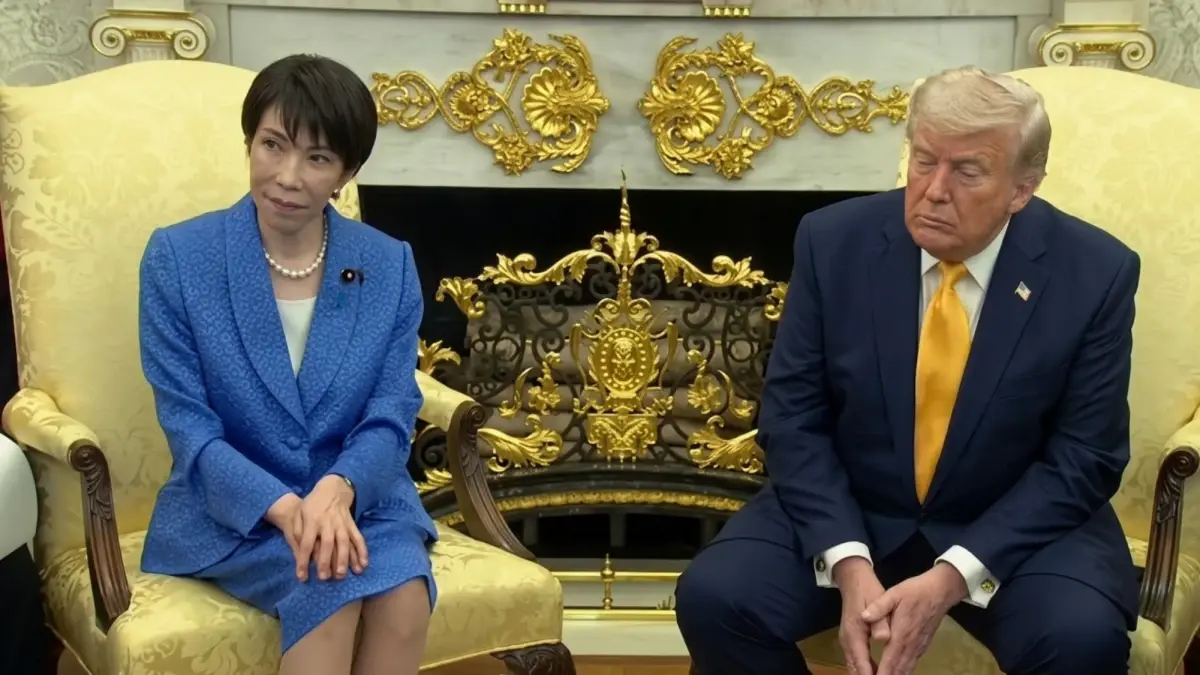
What was expected to be a routine diplomatic meeting between US President Donald Trump and Japan's Prime Minister Sanae Takaichi on March 19 quickly turned tense after an unexpected reference to Pearl Harbour during a press interaction at the Oval Office.
The exchange unfolded when a Japanese reporter questioned Trump over the secrecy surrounding recent US strikes on Iran, asking why American allies had not been informed in advance.
Trump defended the decision, emphasizing the need for strategic surprise.
"We didn't tell anybody because we wanted a surprise," he said, before adding a remark that shifted the tone of the room:
"Who knows better about surprise than Japan? Why didn't you tell me about Pearl Harbor?"
The comment prompted a visible reaction from Prime Minister Takaichi, who chose not to respond directly. Her expressions and gestures during the exchange quickly gained traction on social media, drawing widespread attention.
Despite the awkward moment, Takaichi later struck a more conciliatory tone, even praising Trump, describing him as "the only person who can achieve peace across the world."
Why Pearl Harbor Still Resonates?
Trump's reference touched on one of the most sensitive chapters in US-Japan history. On December 7, 1941, Japan launched a surprise air attack on the US naval base at Pearl Harbor in Hawaii.
The assault, carried out by more than 350 aircraft in two waves, lasted around 90 minutes and caused devastating damage:
Eight battleships were destroyed or damaged
Nearly 200 aircraft were hit, many on the ground
2,403 Americans were killed, and 1,178 were injured
The attack led the United States to formally enter World War II the following day.
Because of its historical weight, references to Pearl Harbor remain highly sensitive in diplomatic contexts, even though the US and Japan have since built one of the world's strongest alliances.
Strategic talks overshadowed
Beyond the controversy, the meeting focused on key issues including defence cooperation, trade, and Indo-Pacific security. Japan continues to play a crucial role as a US ally in addressing regional challenges posed by China and North Korea.
However, the tense moment came amid escalating global tensions. The recent US strikes on Iran have drawn Washington deeper into the conflict, with Trump seeking support from allies.
"We're undertaking this operation, and once it's finished, the world will be much safer," Trump said, adding that Japan's Prime Minister shares his view.
He also urged Japan to deploy warships to the Strait of Hormuz, a critical route for global oil shipments that has been severely disrupted amid the ongoing conflict.
For Japan, the situation is particularly complex. The country has traditionally maintained balanced relations across the Middle East, often positioning itself as neutral while fostering ties with both Israel and Arab nations.
As tensions rise, Tokyo faces increasing pressure to support its key ally, the United States, while preserving its diplomatic equilibrium in the region.