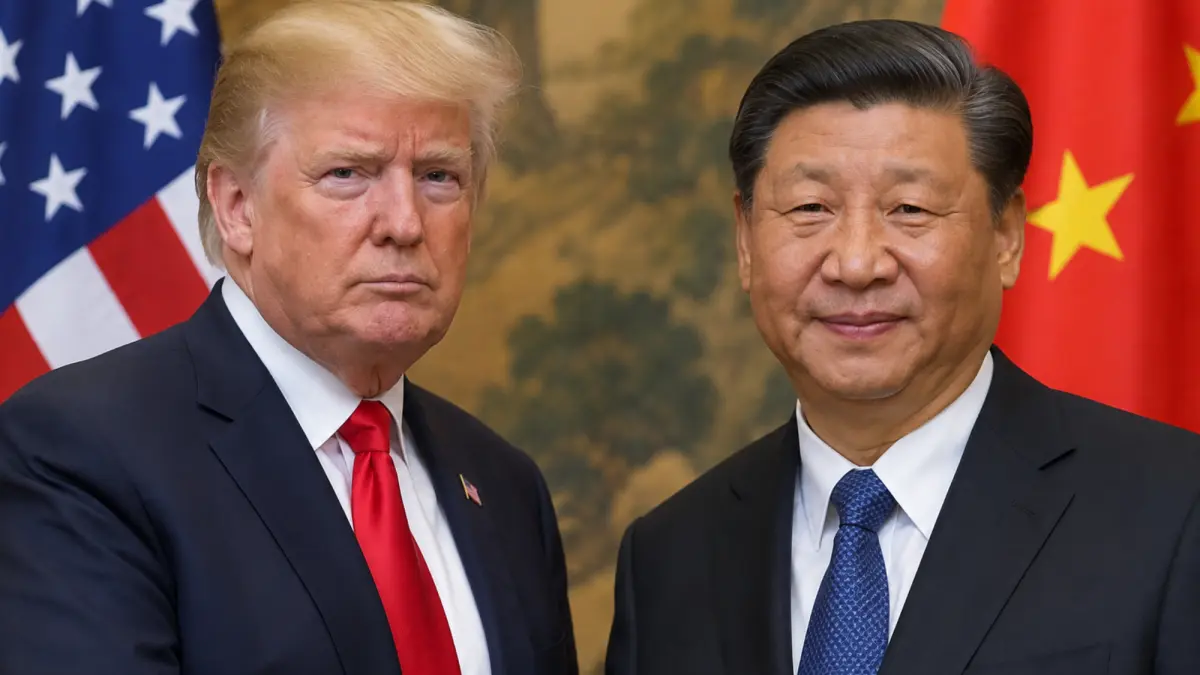
U.S. President Donald Trump and Chinese President Xi Jinping are preparing for another closely watched meeting, with Xi due to arrive in Washington for a summit with Trump on September 24.
It will be the second Trump-Xi summit of 2026, following Trump's visit to Beijing in May.
The meeting comes at a delicate point in relations between the world's two largest economies.
Washington and Beijing have managed to keep parts of their trade relationship from sliding back into a full-scale confrontation.
Still, major disagreements remain over tariffs, technology, artificial intelligence, critical minerals, Taiwan and China's relationship with Iran.
The September summit is therefore not simply another diplomatic meeting.
It is an attempt to determine whether the fragile stability reached over the past year can be maintained, and whether the two governments can turn temporary understandings into longer-lasting arrangements.
Core Agenda And Key Issues
Trade Truce Extension
The top priority is deciding whether to extend the bilateral trade agreement.
Both leaders are looking to prevent a return to full-scale trade warfare. Talks will address previous agricultural purchase commitments, critical minerals, and compliance with bilateral trade boards.
Artificial Intelligence (AI) Dialogue
The two superpowers are working to formalise a new U.S.-China AI Dialogue.
This includes a proposed national security-level incident notification mechanism to manage risks associated with advanced AI systems.
Geopolitical Flashpoints And Technology Controls
Contentious topics such as Taiwan, maritime friction in the South China Sea and global conflicts, including China's stance regarding the Middle East and Russia, remain on the table.
Washington's restrictions on advanced technology and semiconductor exports to China remain a primary point of friction.
Economic Disparities
Xi Jinping enters the meeting backed by a massive Chinese global trade surplus.
Trump is highly focused on securing tangible economic deliverables and market access for American businesses to ease domestic economic pressures.
Preparatory Diplomatic Groundwork
The Marathon New York Talks
On September 20, 2026, U.S. Treasury Secretary Scott Bessent and Trade Representative Jamieson Greer met with Chinese Vice Premier He Lifeng at JPMorgan Chase's global headquarters in New York City.
The officials held a comprehensive eight-hour meeting to finalise agreements for the two presidents to sign.
Both sides described the interaction positively, with Bessent calling it "very successful" and Chinese state media Xinhua characterising it as "candid, in-depth and constructive".
Operationalising the "Board of Trade"
A breakthrough during the groundwork meetings was the official formalisation of the U.S.-China Board of Trade.
Initially proposed during earlier talks in Beijing, negotiators successfully operationalised the bilateral body to facilitate ongoing trade negotiations and tariff-cut frameworks for non-strategic goods.
Political Dynamics and Economic Concerns
China's Position
Xi Jinping arrives in the United States with a powerful economic backdrop on track to log a massive trade surplus with the global economy for a second consecutive year, leaving Beijing in a comfortable position without urgent need for major concessions.
U.S. Constraints
Donald Trump enters the summit facing domestic headwinds, including lower approval ratings and economic friction tied to ongoing involvement in the Middle East conflict, which is increasing his focus on securing tangible trade deliverables.
Another opportunity is already on the horizon. The leaders are expected to meet again at the APEC Economic Leaders' Meeting in Shenzhen in November, giving Washington and Beijing a relatively short window to implement whatever is agreed in Washington.
For now, the September 24 summit is best understood as another attempt to manage a relationship that remains deeply competitive but too economically and strategically important for either side to ignore.