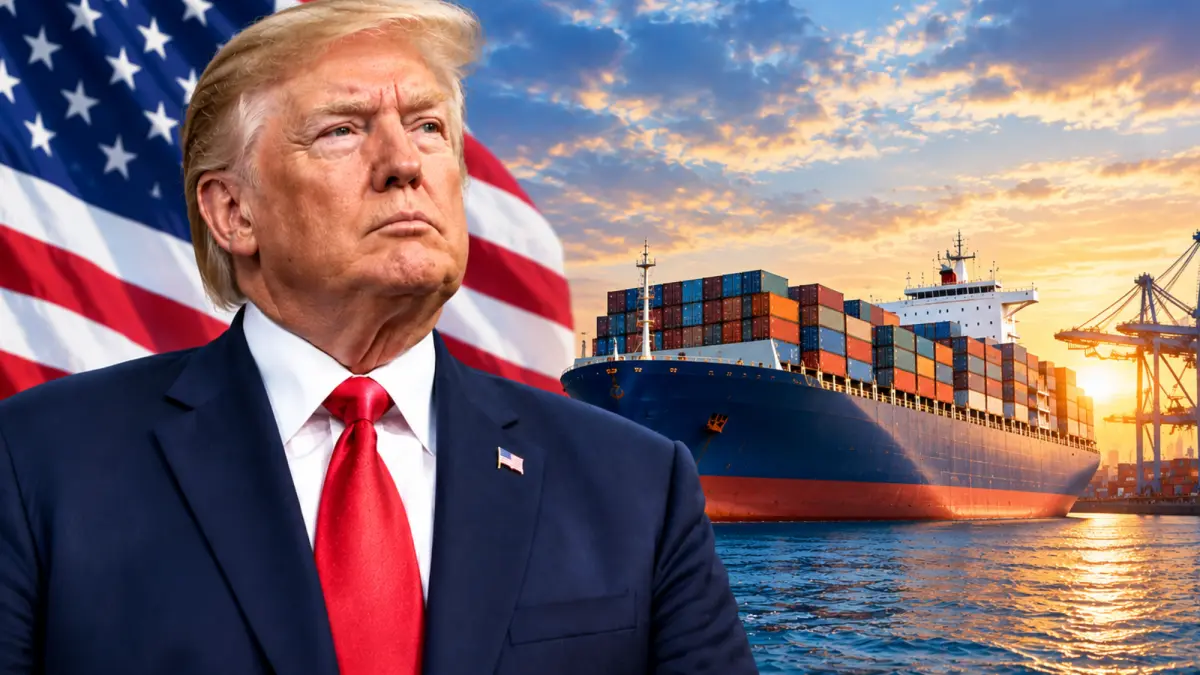
A free-trade dispute is developing between the United States and India after the US House of Representatives approved legislation that could allow President Donald Trump to impose tariffs of up to 100% on countries that continue to buy large quantities of Russian oil and natural gas.
India has emerged as one of the countries most exposed to the proposal because it remains one of the biggest buyers of Russian crude.
However, despite headlines about a 100% tariff on India, the tariff has not been imposed yet.
The House passed the legislation on September 16, 2026, and the bill has now been sent to President Trump for his signature.
No specific implementation date for the proposed 100% tariff has been announced.
The development is part of a much larger US effort to put economic pressure on Russia over its continuing war in Ukraine.
The proposed tariffs are designed not simply as a trade measure against India, but as a way to pressure countries that continue to purchase Russian energy.
What Exactly Is A Tariff?
A tariff is a tax charged on imported goods when they enter a country.
If the United States applies a 100% tariff to goods imported from a particular country, the importer could face a customs duty equal to the goods' value.
For example, if goods worth $100,000 were subject to a 100% tariff, the applicable tariff would amount to $100,000.
The importer would therefore face a substantially higher landed cost. That does not necessarily mean the exporting country directly writes a cheque to the US government.
In practice, the US importer generally pays the customs duty, although the economic burden can then be distributed through higher prices, lower margins, reduced demand or changes in supply chains.
This distinction matters in the India story because the proposed US measure would target goods coming into the United States from countries identified under the legislation, rather than placing a 100% tax directly on the Russian oil India purchases.
Key Details Of The Legislation
The Lindsey O. Graham Sanctioning Russia and Iran Act of 2026 is a sweeping, 61-page legislative package passed by the US Congress on September 16, 2026.
Its primary objective is to choke off the revenue streams funding Russia's war in Ukraine by turning secondary sanctions into powerful trade enforcement mechanisms.
Executive Tariff Authority (The 100% Clause)
The bill directs the US Trade Representative and authorises the President to increase import duties up to 100% ad valorem on all goods from targeted nations.
This penalty applies directly to countries in two categories.
Any country that was among the five largest global importers of Russian-origin crude oil or natural gas in the 12 months preceding the bill's enactment.
Any country that knowingly makes new purchases of Russian energy products after the bill is signed into law.
Because of their massive purchase volumes, India and China are the primary targets exposed under this clause.
Specific Exceptions and Carve-Outs
The legislation outlines an explicit exception for countries, primarily European nations, that rely on Russian natural gas for less than 15% of their total natural gas imports, provided they have demonstrated 'significant steps' toward phasing out those purchases entirely.
To maintain diplomatic flexibility, the law gives the President executive discretion to waive or lower the tariffs if a country shows a clear trajectory of reducing its dependence or if enforcing the tariff compromises US national security interests.
Comprehensive Sanctions On Russia And Iran
The act mandates strict, expanded penalties on the global 'shadow fleet' of maritime tankers used by Moscow to circumvent previous G7 price caps and deliver crude to international buyers.
Beyond energy trade, the bill codified mandatory sanctions against senior Russian government officials, military leaders, and core financial institutions.
It officially ropes in and expands existing economic sanctions on Iran for its direct military and logistical support of Russia's invasion.
Congressional Standing
Unlike previous sanctions that relied purely on temporary Presidential Executive Orders, this is an Act of Congress.
This places any subsequent tariffs on a permanent, much sturdier legal foundation that is significantly harder to challenge in US courts or dismantle in future administrations.
How India Is Responding
The Ministry of External Affairs (MEA) immediately released an energy security statement emphasising that India's priority remains its 1.4 billion citizens first.
India maintains that its energy purchases are based strictly on market dynamics and national commercial interest.
Shifting to heavily discounted Russian oil has saved the Indian economy an estimated $12.6 billion since 2022.
The MEA noted it is closely monitoring the situation and will take 'all necessary measures' to protect its bilateral trade and economic interests.
For context, India's current effective tariff rate for exports to the US sits at roughly 12%.
A jump anywhere near 100% would put heavy strain on India-US trade ties, though Indian officials say ongoing parallel trade negotiations with Washington have been 'reassuring'.
The latest development is ultimately about more than tariffs.
The United States is trying to increase economic pressure on Russia by making continued purchases of Russian energy more costly for major trading partners.
India is caught in the middle because it has become one of Russia's largest crude customers while also maintaining an important trading relationship with the United States.